Introduction
Whether you’re building a new home, renovating, or developing land in Gold Coast, Brisbane or South East Queensland, stormwater compliance is essential. Local councils have strict requirements to ensure drainage systems can handle heavy rainfall and prevent flooding, erosion, and property damage. Failing to meet these standards can result in re-inspections, costly rectification work and delays to your project.
This 2025 guide covers the key stormwater regulations in Queensland and explains what builders, developers, and homeowners need to understand before starting any construction.
Who Regulates Stormwater in Queensland?
Stormwater rules come from three main regulatory sources, and all drainage work must comply with these:
1. Queensland Development Code (QDC)
QDC sets statewide performance standards for stormwater, including flow management, pipe sizing and legal discharge points.
2. Local Council Requirements
Each council has its own drainage guidelines, such as:
-
Gold Coast City Council
-
Brisbane City Council
-
Logan City Council
-
Ipswich City Council
-
Moreton Bay, Redlands and Scenic Rim
These local guidelines detail pipe materials, pit spacing, easements, driveway drainage, and overland flow requirements.
3. Australian Standards
Key standards include:
-
AS3500.3 – Stormwater Drainage
-
AS/NZS 3500 – Plumbing & Drainage
-
QDC MP1.4 – Building Over or Near Infrastructure
Core Stormwater Requirements Across Southeast QLD
Although each council has its own policies, most share these core requirements.
1. Stormwater Must Discharge to a Legal Point
Stormwater must be directed to an approved legal discharge point such as kerb and channel, stormwater pits, or interallotment drainage systems. Discharging water onto neighbouring properties is prohibited.
2. All Downpipes Must Connect to an Approved System
Downpipes must be connected directly to underground stormwater lines that comply with AS3500.3. Roof areas must be matched with correctly-sized pipes capable of handling peak rainfall events common in Gold Coast and Brisbane.
3. Correct Pipe Gradient (Fall)
Stormwater pipes must have the correct gradient to ensure positive flow. Insufficient fall causes blockages, backflow and pipe damage. Minimum fall requirements vary by council and pipe size.
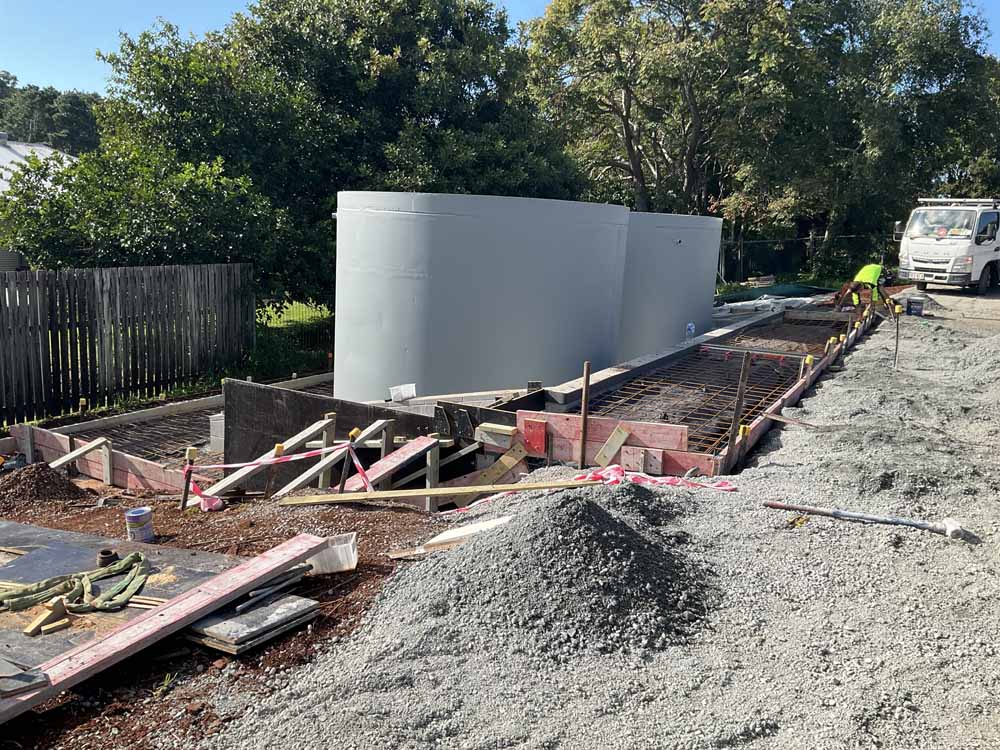
4. On-Site Detention (OSD) for Many New Builds
Brisbane City Council in particular requires on-site detention tanks or rainwater detention systems for many new dwellings and developments. These systems reduce flooding risk during heavy rainfall.
5. Surface Water Management
Builders must ensure land falls away from the house, retaining walls include drainage behind them, and surface water is not redirected to neighbouring properties. Proper grading prevents ponding, erosion and structural issues.
6. Building Over Infrastructure Rules
Under QDC MP1.4, structures cannot be built over:
-
Stormwater mains
-
Sewers
-
Easements
-
Manholes
Unless a Build Over Infrastructure approval is granted.
Gold Coast Specific Stormwater Requirements
Gold Coast City Council has detailed drainage design guidelines including:
-
Approved pipe materials
-
Surface drainage for driveways
-
Overland flow preservation
-
Correct sizing of stormwater pits and spacing
-
Additional requirements in high-rainfall or flood-prone suburbs
Many coastal suburbs require upgraded stormwater capacity due to historical flooding issues.
Brisbane Specific Stormwater Requirements
Brisbane City Council is known for strict stormwater compliance. Requirements often include:
-
Mandatory on-site detention systems (OSD)
-
Detailed drainage and civil engineering plans
-
Approved interallotment drainage connections
-
Ensuring safe major and minor stormwater flow paths
Non-compliant work often fails final inspections, causing project delays.
Why Proper Stormwater Compliance Matters
Poor drainage design or installation can lead to significant issues such as:
-
Structural and foundation damage
-
Flooding inside or outside the home
-
Subsidence and erosion
-
Neighbour disputes and legal action
-
Failed council approvals
-
Expensive rectification work
Choosing an experienced stormwater contractor ensures your system is compliant, durable and designed for Southeast Queensland’s extreme weather conditions.
Conclusion
Understanding stormwater regulations is essential for any construction project in Gold Coast, Brisbane and South East Queensland. HITZ Drainage Contractors specialise in compliant stormwater installation, upgrades and repairs, ensuring your project meets QDC, council and Australian Standards.
For reliable stormwater solutions, contact HITZ Drainage Contractors for expert advice and on-site assessment.