Introduction
Every building, driveway, road and subdivision starts with earthworks. Get this stage wrong and the problems show up later as cracked slabs, settling pavements and drainage that never works properly.
This guide explains what bulk earthworks involves, the stages of a typical job, and what to ask your contractor before work begins. You can see how this plays out on real sites in our recent drainage and earthworks projects.
What are bulk earthworks?
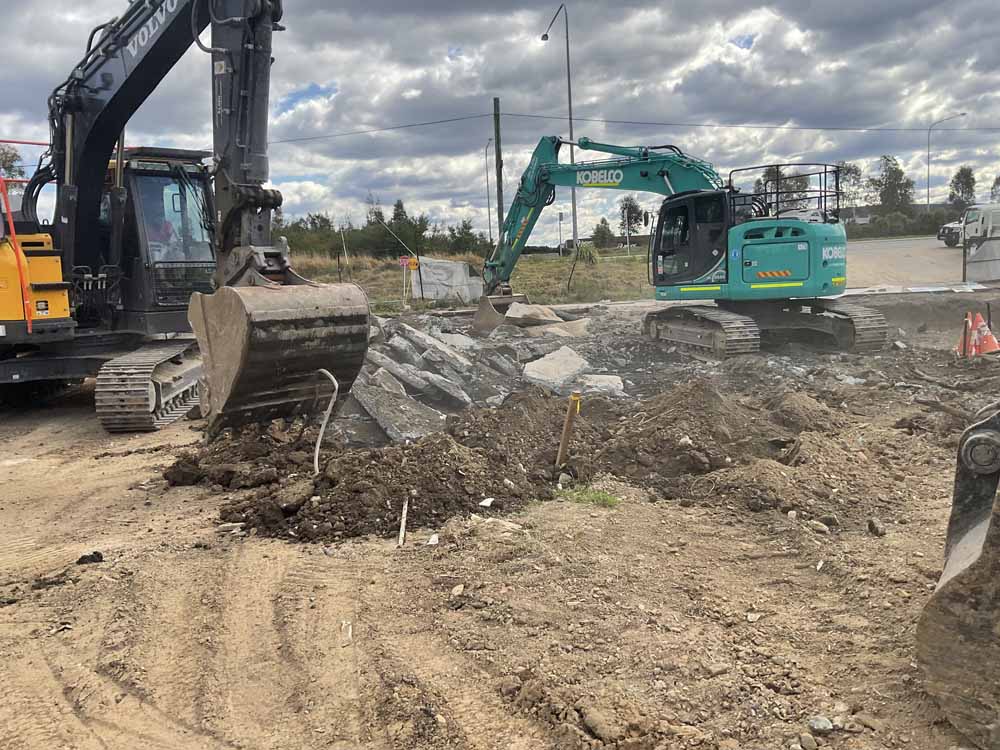
Bulk earthworks, a core part of civil earthworks, is the large-scale reshaping of a site: removing, moving and placing soil and rock so the land reaches the levels the design requires. It covers everything from clearing a vacant block to forming the platform for a commercial development.
The main stages of an earthworks job
- Site investigation and planning. Review the plans and geotechnical information, identify underground services, and confirm access and levels.
- Clearing and stripping. Remove vegetation and strip topsoil, stockpiling it separately where it will be reused.
- Cut. Excavate high areas down to the design levels.
- Fill. Place suitable material in low areas in layers, so it can be compacted properly.
- Compaction and testing. Each layer is compacted to the specified standard, and testing confirms the result where the project requires it.
- Trimming and finishing. Final shaping to the design levels and falls, ready for the next trade.
What are cut and fill?
Cut is soil removed from an area higher than the finished level. Fill is soil brought in or moved to an area lower than the finished level. On a well-planned site, the cut material is reused as fill, which reduces the cost and number of truck movements. When the volumes don’t balance, the surplus must be carted away or extra material imported.
Why drainage is part of earthworks, not an afterthought
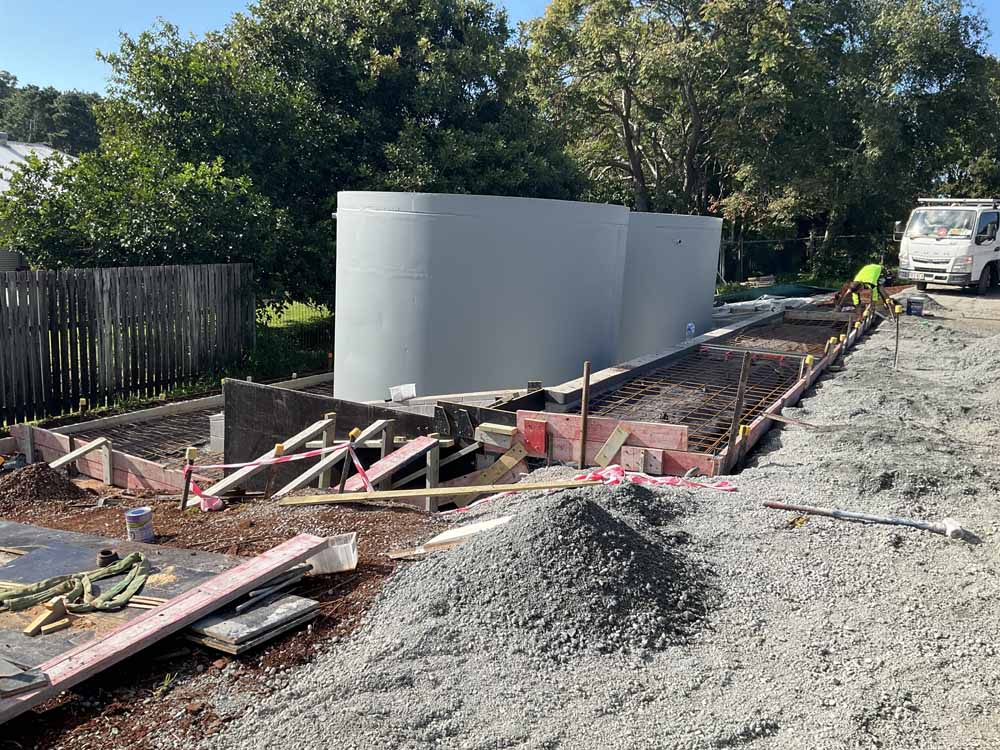
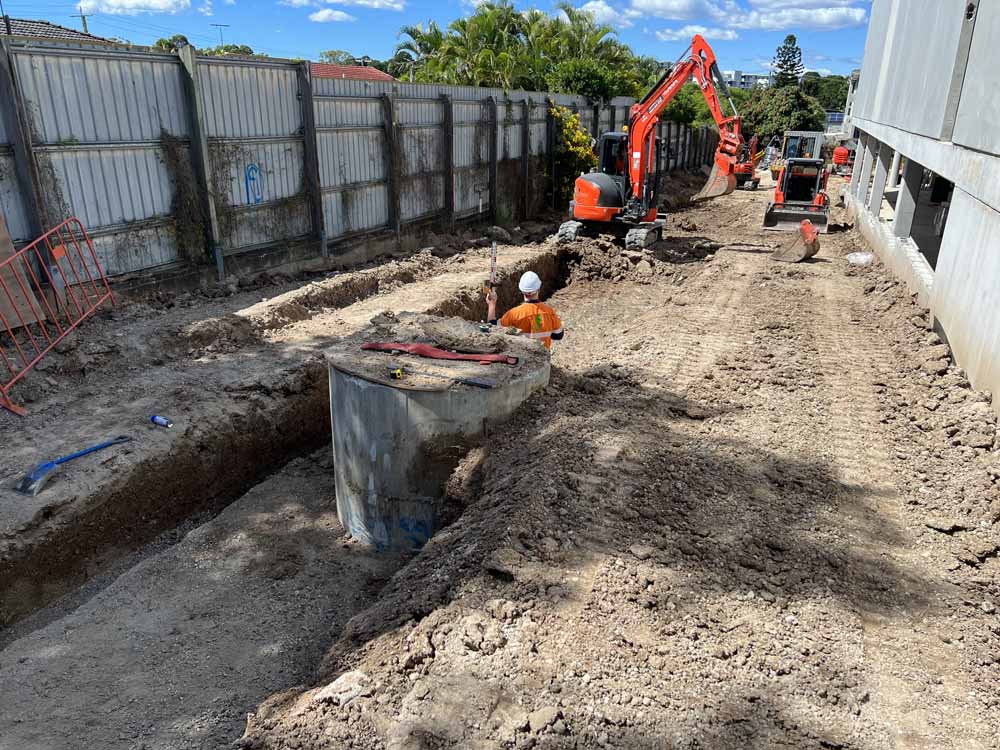
The finished surface determines where water goes. Correct falls, drainage lines and pits should be planned alongside the earthworks, because installing pipes after the surface is finished often means digging up fresh work. This is why many projects combine earthworks and drainage under one contractor.
What affects earthworks on the Gold Coast
- Soil type. Sand, clay and fill from previous development each behave differently.
- Weather. Heavy rain can stop work, soften subgrades and increase erosion risk.
- Access. Tight residential sites need smaller machines, and larger developments need bigger plant.
- Spoil disposal. Moving surplus material off site costs money and takes time.
- Approvals. Council conditions can affect hours, truck routes and sediment control.
Questions to ask your earthworks contractor
- Will you review the plans and soil information before quoting?
- How will you balance cut and fill, and what happens to the surplus?
- How will you manage drainage and sediment during the works?
- What testing and sign-off will you arrange?
- What is included in the quote, and what could change it?
Frequently asked questions
How long do earthworks take? It depends on the site size, volume of material and weather. A single house pad can take days, while larger developments take weeks or months.
Do I need approval for earthworks? Often, yes. Requirements depend on the scale of the work and your local council, so check with the City of Gold Coast or Brisbane City Council before you start.
What’s the difference between earthworks and excavation? Excavation is digging. Earthworks is the wider process of reshaping a site, including excavating, filling, compacting and finishing.
Conclusion
Good earthworks give every trade that follows a stable, correctly graded foundation. HITZ Drainage Contractors delivers excavation, site preparation and civil earthworks for projects of all sizes across the Gold Coast, Brisbane and South East Queensland, and our plant hire fleet can supply the machines for your site. Call 0400 777 683 or request a free quote to discuss your site.